
Bioluminescence technologies.
Accelerate Your Research with Advanced Bioluminescence Technologies for Fast, Reliable Results.
Bioluminescence is the natural emission of light produced by a biochemical reaction. In biotechnology, this phenomenon is used as a highly sensitive detection technology for measuring biological activity, molecular interactions, enzymatic reactions, and the presence of specific targets. Bioluminescence technology has become a powerful tool for researchers because it combines speed, sensitivity, and simplicity. From rapid testing to high-throughput screening, bioluminescence applications help laboratories generate reliable data while reducing experimental complexity.
What is bioluminescence in biotechnology?
Originally observed in marine organisms such as jellyfish, shrimp, fish, and microorganisms, bioluminescence allows living systems to produce light without an external illumination source. In nature, this light may be used for communication, camouflage, attraction, or defense. In the laboratory, the same principle is transformed into a precise analytical tool.
The core value of bioluminescence in biotechnology lies in its ability to generate a measurable light signal only when a specific biochemical reaction occurs. This makes it particularly useful for detecting very small quantities of molecules or biological activity. Unlike methods that depend on external excitation light, bioluminescent systems can offer very low background noise, which improves the clarity and reliability of results.
Today, bioluminescence is widely used in molecular biology, biomedical research, drug discovery, diagnostics, biosensing, environmental monitoring, and cell-free protein systems. It is especially relevant when scientists need rapid, quantitative, and highly sensitive readouts.


How does bioluminescence work in laboratory applications?
The biochemical reaction: luciferase and substrate
Bioluminescence is based on a reaction between an enzyme and a substrate. The enzyme is generally called luciferase, while the substrate is commonly referred to as luciferin or a luciferin-derived molecule. When luciferase catalyzes the oxidation of its substrate, energy is released in the form of light.
In laboratory applications, this reaction is engineered to act as a biological signal. The emitted light can be linked to the presence of a molecule, the activation of a pathway, the expression of a gene, or the activity of an enzyme. The stronger the biological signal, the stronger the light emission.
This makes bioluminescence particularly powerful for quantitative assays. Instead of only indicating whether a biological event has occurred, the intensity of the light can provide information about how much activity is present. This is essential in research workflows where scientists need to compare samples, follow kinetic responses, evaluate dose-response effects, or monitor biological processes over time.
Bioluminescence can also be adapted through engineered luciferases, optimized substrates, and assay-specific molecular designs. These improvements help increase signal intensity, reduce background noise, improve stability, and expand the range of possible applications.
Signal generation and detection systems
In a bioluminescent assay, light is generated directly by the biochemical reaction. This light can then be measured using instruments such as luminometers, microplate readers, or imaging systems. Because the signal does not require external excitation, the optical setup is often simpler than fluorescence-based detection.
This absence of external excitation is one of the key technical advantages of bioluminescence. In fluorescence, a light source is needed to excite the fluorophore. This can generate background signal, autofluorescence, and optical interference. In bioluminescence, the signal is produced only by the reaction itself, which helps achieve a very high signal-to-noise ratio.
For researchers, this means that bioluminescence can detect very low levels of target molecules or biological activity. It is particularly useful when the analyte is present at low concentration or when the biological response is subtle. High sensitivity is valuable in applications such as biomarker detection, enzymatic assays, cell viability studies, reporter gene assays, and rapid screening workflows.
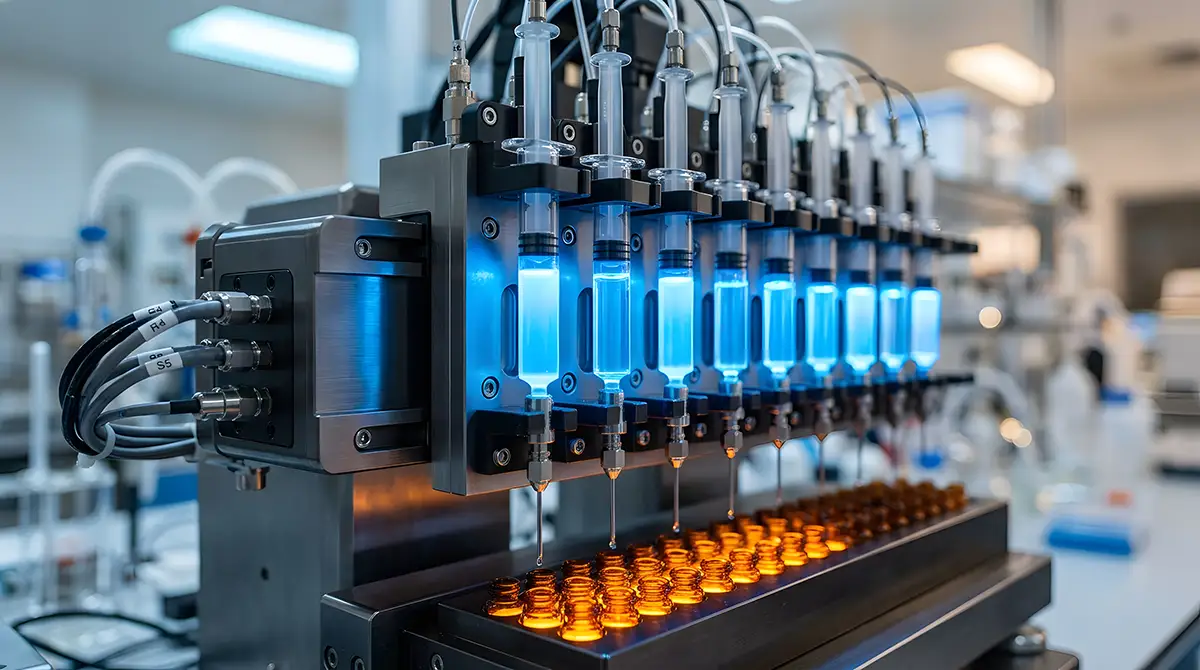
Modern detection systems also make bioluminescence compatible with automation and miniaturized formats. This is important for high-throughput applications, where hundreds or thousands of samples may need to be analyzed in parallel.
Bioluminescent assays in laboratory workflows
Bioluminescent assays are often appreciated because they are simple to implement. A typical workflow includes preparing the biological sample, adding the luciferase substrate or detection reagent, allowing the reaction to occur, and measuring the emitted light.
This streamlined workflow reduces the number of experimental steps. Fewer steps generally mean less handling, lower variability, and better reproducibility. For laboratories managing multiple samples or time-sensitive experiments, this is a major practical advantage.
Bioluminescent assays can be used in endpoint formats, where the signal is measured at a specific time point, or in kinetic formats, where signal evolution is monitored over time. Kinetic measurements are especially useful for studying enzymatic activity, cellular responses, or real-time biological processes.
Common bioluminescent assay formats include ATP detection assays, luciferase reporter assays, cell viability assays, cytotoxicity assays, enzymatic assays, immunoassays, and biosensing systems. Depending on the application, the assay may be performed in cells, in solution, in microplates, or in cell-free systems.
Because of their speed and sensitivity, bioluminescent assays are increasingly used in rapid testing workflows. They are also suitable for laboratories looking to improve throughput without compromising analytical performance.
What differentiates bioluminescence from fluorescence?
Bioluminescence and fluorescence are both optical detection technologies, but they rely on different mechanisms.
Fluorescence requires an external light source. A fluorescent molecule absorbs light at one wavelength and emits light at another wavelength. This is very useful for imaging, localization studies, and multiplex detection. However, the need for external excitation can introduce background noise, autofluorescence, and signal interference.
Bioluminescence does not require external excitation. The light is generated by the biochemical reaction itself. This allows bioluminescent systems to produce cleaner signals with lower background.
As a result, bioluminescence is often preferred for highly sensitive quantitative assays, especially when detecting low-abundance targets.
The choice between bioluminescence and fluorescence depends on the experimental objective:
– Fluorescence is often strong for spatial imaging and multiplex labeling.
– Bioluminescence is particularly strong for rapid, sensitive, quantitative detection.
Advantages of bioluminescence for rapid testing
High sensitivity and low background noise
One of the most important advantages of bioluminescence is its very low background noise. Because no excitation light is required, there is less optical interference. This allows researchers to detect faint biological signals that may be difficult to measure using other methods.
High sensitivity is essential in many life science applications. In biomarker research, early-stage signals can be present at extremely low concentrations. In enzymatic assays, subtle changes in activity may have important biological meaning. In drug discovery, small differences between compounds can influence decision-making.
Bioluminescence helps make these weak signals measurable. This is why it is widely used when precision and sensitivity are critical.
Rapid signal generation and real-time measurement
Bioluminescent reactions can generate signals very quickly after substrate addition. This makes the technology highly suitable for rapid testing and time-sensitive workflows.
In research and development, speed matters. Faster assays allow teams to evaluate more conditions, shorten development cycles, and make decisions earlier. For screening campaigns, rapid readouts can improve throughput and reduce bottlenecks.
Bioluminescence can also support real-time or near-real-time measurements. This is valuable for tracking dynamic biological processes such as enzyme kinetics, cellular signaling, metabolic activity, or gene expression changes.
Simplified experimental workflows
Bioluminescent assays often require fewer steps than other detection methods. The absence of excitation and complex optical filtering can simplify both assay design and instrument requirements.
Simplified workflows are valuable for several reasons. They reduce the risk of technical error, improve reproducibility, save time, and make assays easier to transfer between teams or laboratories.
This is especially important in industrial environments, where reliability and scalability are essential. A detection method that is sensitive but difficult to reproduce may not be suitable for routine use. Bioluminescence offers a strong balance between analytical performance and operational simplicity.
Compatibility with diverse biological systems
Bioluminescence can be used in many biological systems, including living cells, purified proteins, enzymatic reactions, immunoassays, biosensors, and cell-free systems.
This flexibility makes it attractive for research teams working across multiple stages of development. The same detection principle can be adapted to early discovery, assay development, screening, validation, and applied testing.
Bioluminescence is also compatible with miniaturized formats, microplates, and automated platforms. This supports its use in high-throughput environments.
Scalability for high-throughput applications

Discover Hikarazine
Bioluminescent Pro-substrate Hikarazine™ Z103
High-throughput screening requires detection technologies that are fast, reproducible, sensitive, and easy to automate. Bioluminescence meets these requirements well.
Because the readout is based on light emission, data acquisition can be rapid. Because the background noise is low, results can be easier to interpret. Because the workflow is simple, assays can be scaled to large sample numbers.
This makes bioluminescence particularly relevant for pharmaceutical research, biotech screening platforms, diagnostic development, and bioanalytical workflows.
Bioluminescence vs fluorescence: key differences
Bioluminescence and fluorescence are not necessarily competing technologies. In many research environments, they are complementary. Fluorescence is often preferred when spatial resolution, imaging, or multiplex labeling are required.
Bioluminescence is often preferred when the priority is sensitivity, speed, low background, and quantitative detection.
For rapid testing and high-throughput assays, bioluminescence offers a major advantage because it produces a clean signal with fewer optical constraints.
For complex imaging studies, fluorescence may remain the better option.
The right choice depends on the scientific question, sample type, required sensitivity, available instrumentation, and workflow constraints.
Applications of bioluminescence in R&D and biosensing
Bioluminescent assays in drug discovery
Drug discovery relies on robust assays that can detect biological activity quickly and reliably. Bioluminescent assays are widely used to evaluate compound effects on cells, enzymes, pathways, and molecular targets.
In early discovery, bioluminescence can help screen large libraries of compounds. In later stages, it can support dose-response analysis, mechanism-of-action studies, cytotoxicity testing, and functional validation.
Because of its sensitivity and compatibility with high-throughput formats, bioluminescence is particularly useful for identifying subtle biological effects. This can help researchers prioritize promising compounds more efficiently.
Reporter gene assays and cellular activity monitoring
Luciferase reporter assays are among the most common uses of bioluminescence in molecular biology. In these assays, the luciferase gene is placed under the control of a promoter or regulatory sequence of interest. When the pathway is activated, luciferase is expressed and produces light in the presence of its substrate.
This allows researchers to monitor gene expression, pathway activation, transcriptional regulation, and cellular responses. Reporter gene assays are widely used in cell biology, oncology, immunology, pharmacology, and toxicology.
The benefit of bioluminescent reporter systems is that they provide a sensitive and quantitative readout. They are particularly useful when researchers need to compare different treatments, time points, or experimental conditions.
Enzymatic activity detection
Bioluminescence is also highly effective for detecting enzymatic activity. In these assays, light production is linked to the presence or activity of a specific enzyme.
This approach can be used to study metabolic pathways, kinase activity, protease activity, ATP levels, and other biochemical processes. Because enzyme activity can change rapidly, the fast signal generation of bioluminescence is a major advantage.
Enzymatic bioluminescent assays are valuable in both academic and industrial research. They can support target validation, drug screening, quality control, and functional characterization.
Biosensing and rapid field-compatible systems
Biosensing is another important area for bioluminescence applications. A biosensor is designed to detect a specific biological or chemical target and convert that detection event into a measurable signal.
Bioluminescence is well suited to biosensing because it can generate a clear signal without complex optical excitation. This supports the development of portable, rapid, and potentially field-compatible detection systems.
Potential biosensing applications include pathogen detection, environmental monitoring, contamination testing, biomarker detection, and safety testing. In these contexts, the ability to produce a fast and sensitive signal can be decisive.
Integration with cell-free systems
Bioluminescence is particularly powerful when combined with cell-free systems. Cell-free protein synthesis allows biological reactions to be performed outside living cells, using the molecular machinery needed to produce proteins in a controlled environment.
This creates opportunities for rapid prototyping, functional testing, biosensor development, and assay optimization. Because cell-free systems avoid many constraints associated with living cells, they can accelerate development timelines.
For example, bioluminescent proteins or assay components can be produced and tested in cell-free formats. This can help researchers evaluate constructs, optimize reaction conditions, and develop detection systems more rapidly.
The combination of cell-free technology and bioluminescence is especially relevant for teams seeking flexible, fast, and scalable bioanalytical solutions.
Synthelis bioluminescence technology

A technology designed for sensitive and rapid detection
Synthelis Biotech supports advanced bioluminescence-based solutions for life science research and bioanalysis. The technology highlighted on the Synthelis page is built around the LuliFLASH platform developed by BIOCELLIS at Institut Pasteur. This platform is designed to provide ultra-high analytical sensitivity and rapid measurement.
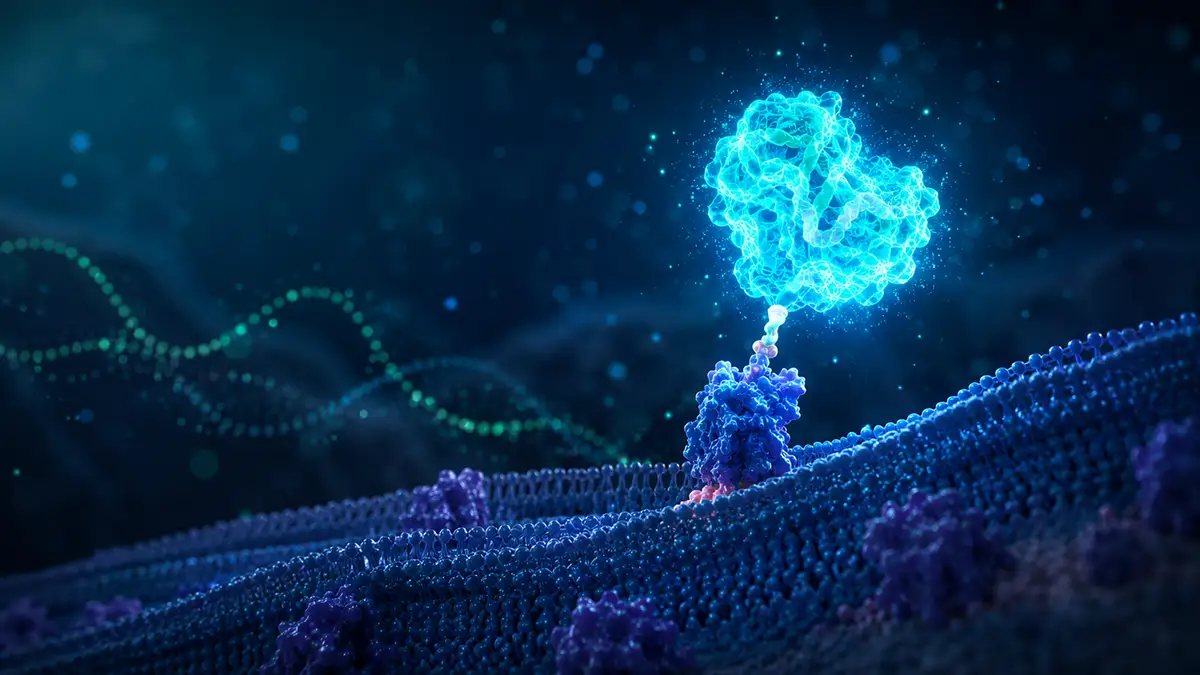
The approach is based on a split-luciferase principle. Instead of using a full luciferase enzyme as a single unit, the system uses optimized luciferase fragments. These fragments are designed so that the catalytic site is reconstituted only when the complementary fragments are brought together by binding to the same target biomarker.
This principle supports high specificity because the light signal is generated only when the target-driven molecular interaction occurs. For researchers, this can improve confidence in the signal and reduce nonspecific background.
Optimized recombinant ligands
Another important element of the platform is the use of recombinant ligands co-expressed as chimeric proteins with luciferase fragments. This design can help optimize assay affinity, simplify assay development, and support scalable production.
From a workflow perspective, this is important because assay development can be a major bottleneck. A system that helps shorten development time while maintaining sensitivity can bring significant value to research and industrial teams.
Hikarazine™ substrates
Synthelis also highlights Hikarazine™, a chemically optimized substrate designed to reduce background noise, improve assay sensitivity, and support cost-effective production.
Substrate quality is critical in bioluminescence. A good substrate should generate strong signal, remain stable under relevant conditions, and minimize nonspecific background. Optimized substrates can improve the performance of the entire assay system.
By combining engineered luciferase fragments, recombinant ligands, and optimized substrates, the technology is designed to support rapid, sensitive, and scalable bioluminescence applications.
Why choose Synthelis?
Expertise in cell-free and bioluminescence systems
Synthelis Biotech has strong expertise in advanced biotechnology workflows, including cell-free protein expression and bioluminescence-based solutions. This dual expertise is particularly valuable because many modern applications require more than a single technology. They require the ability to connect protein production, assay development, detection chemistry, and experimental design.
For research teams, working with a partner that understands both cell-free systems and bioluminescence can help reduce development complexity. It also supports more tailored solutions adapted to specific biological questions.
Technology-oriented support
Synthelis Biotech’s positioning is not limited to providing products. The company brings technical know-how to help researchers address specific challenges. This includes adapting systems to target requirements, optimizing workflows, and supporting assay development.
In high-sensitivity detection, details matter. Enzyme choice, substrate performance, ligand design, sample matrix, detection system, and timing can all influence results. Technical support can therefore make a significant difference in experimental success.
Solutions for research and industry
Bioluminescence is relevant for academic laboratories, biotech companies, pharmaceutical research teams, diagnostic developers, and bioanalysis platforms. Synthelis Biotech’s solutions can support different levels of need, from exploratory research to more applied development.
The technology is particularly relevant for teams looking for rapid readouts, high sensitivity, reduced background, and compatibility with scalable workflows.
Accelerate your research with bioluminescence
Bioluminescence technology offers a powerful combination of sensitivity, speed, and simplicity. By generating light through a biochemical reaction, it enables researchers to detect low-abundance targets, monitor biological activity, simplify workflows, and scale assays for high-throughput applications.
For laboratories working in drug discovery, biosensing, diagnostics, molecular biology, or cell-free systems, bioluminescence provides a reliable path toward faster and more precise detection.
Synthelis Biotech supports the development and use of advanced bioluminescence solutions, including technologies designed for high sensitivity, rapid measurement, and flexible integration into research workflows.
FAQ – Bioluminescence Technologies
What is a bioluminescent assay?
A bioluminescent assay is a detection method based on light produced by an enzymatic reaction. The emitted light is measured and used as a quantitative signal. These assays are widely used to study enzyme activity, gene expression, cell viability, biomarker detection, and molecular interactions.
Why is bioluminescence highly sensitive?
Bioluminescence is highly sensitive because it does not require external excitation light. This reduces background noise and improves the signal-to-noise ratio. As a result, very low levels of biological activity or target molecules can be detected more reliably.
What are the main applications of bioluminescence?
Main applications include drug discovery, reporter gene assays, enzymatic activity detection, cellular activity monitoring, biosensing, pathogen detection, environmental monitoring, and high-throughput screening.
How is bioluminescence different from fluorescence?
Fluorescence requires an external light source to excite a fluorophore, while bioluminescence generates light directly through a biochemical reaction. Bioluminescence usually offers lower background noise, while fluorescence is often useful for imaging and multiplex labeling.
Can bioluminescence be used for rapid testing?
Yes. Bioluminescence is well suited for rapid testing because the signal can be generated quickly and measured directly. This makes it useful for assays where speed, sensitivity, and simple workflows are important.
Is bioluminescence compatible with high-throughput screening?
Yes. Bioluminescent assays can be miniaturized, automated, and adapted to microplate formats. Their rapid readout and high sensitivity make them suitable for high-throughput screening in pharmaceutical and biotech research.
Why combine bioluminescence with cell-free systems?
Combining bioluminescence with cell-free systems enables rapid prototyping and controlled assay development outside living cells. This can accelerate biosensor development, protein testing, and functional screening.